by Christine Lorraine Morgan, April 5, 2026 with research materials provided by Jenny Cook and GC68/Toby
Picture Erie County’s earliest women as they crossed through the untamed wilderness, weaving their way through trails and narrow dirt roads, carrying their meager belongings and precious children with them. Some came with husbands, others were widows seeking a place to call “home.”
In Greenfield Township, Joseph Shadduck Sr. and Joseph Jr. settled around 1794. The latter was said to have sired around 22 children.
One winter, their home became snowbound beneath six feet of snow. To top it off, Joseph was sick and starvation was looming.
That’s when his wife, Betsy, decided to take action to save her starving family.
She “crawled on her knees for half a mile to the ‘potato hole’ where the crop of potatoes and turnips had been buried to prevent freezing. Scraping away the overlying snow and straw with her hands, she was able to bring back enough food to keep them alive,” as explained in “Roaming Erie County” by Herbert Reynolds Spencer.
Betsy Shadduck’s act of digging food out of the frozen ground with her bare hands is just one example of what Erie’s pioneer women did to survive.
Mary Watts Miles and her husband, William, arrived in Erie County in around 1797. “Mrs. Miles carried one baby before her as they rode horseback from Franklin to Union City,” according to “Erie History – The Women’s Story.”
“The other two children were carried in sacks placed like saddlebags on either side of the second horse.”
Two years prior, the first known female settler in Erie, Hannah Reed, arrived by boat. She landed at the mouth of Mill Creek on about July 1, 1795 with her husband Colonel Seth Reed and their sons, Charles John and James Manning. Their sons Rufus Seth and George W. arrived several months later with two more Erie pioneer women, Sophia Reed Fairbanks (Mrs. Joshua) and Mrs. Thomas Rees.
All Hannah had with her when she got here were limited provisions, a handful of utensils, a roll of bedding, and a small cask of whiskey. A crude log cabin was built, and Hannah adapted to the lonely life of being a frontier wife.
It is she who is credited with suggesting that their humble abode become an inn, and her family agreed. Thus the Presque Isle Hotel was created, which is the first known inn and permanent family residence in Erie.
Elizabeth McCullough King and her husband Captain Robert King settled in LeBoeuf Township in 1795. “King’s Gardens” was the name they selected for their homestead.
In 1797 widow Jane Winter Campbell gathered up her six children, their cow and horse, and left the Williamsport area. They stopped about a mile south of present-day Edinboro, and she built a lean-to for the cow, and a log cabin for her family.
“Working together, the widow Campbell and her chldren settled over one thousand acres of land, building several cabins on the property to meet the laws that demanded a habitable structure for each four hundred acres claimed,” as explained in “Erie History – The Women’s Story.”
Rachel Miller was the bride in Erie County’s first recorded wedding on Dec. 27, 1797. She married the Reeds’ son Charles at the family farm in Kearsarge. After the ceremony, the couple rode home in a plain sled that was kept at Fort Presque Isle.
White wedding dresses did not become the standard until the mid-1800s, so Rachel most likely wore an attractive frock that was designed more for practicality than decoration. As exquisite fabrics and fancy frills were not part of pioneer womens’ lives in Erie, there’s a good chance Rachel wore her sensible wedding dress on a daily basis in her role as a frontier wife.
Jeanette Campbell Holliday was the first woman to settle in Springfield Township. She and her husband, Captain Samuel Holliday, traveled from Franklin County to Springfield in 1797. It took four grueling days to work their way through the endless forests and thickets to get here.
They arrived with all their worldly goods tied to the back of a horse: clothes, blankets, a Bible, cooking utensils, needle, thread, and a small jar of yeast.
Isabella Nicholson is said to have arrived in Erie County on foot in 1796, walking here from Fayette County’s wilderness with a horse, her baby, and her husband John, who worked as a surveyor. Their first house was built with sod, which was replaced by a log cabin, which was upgraded to a “saltbox” that they managed as an inn for travelers.
“…in true pioneer spirit, (the Nicholsons) cleared a piece of land for themselves on the ridge above the lake (later clearing a road all the way into town), planted crops, operated grain and lumber mills, opened a tavern, and were instrumental in the construction and establishment of more than one of the area’s earliest churches,” according to hagenhistory. org.
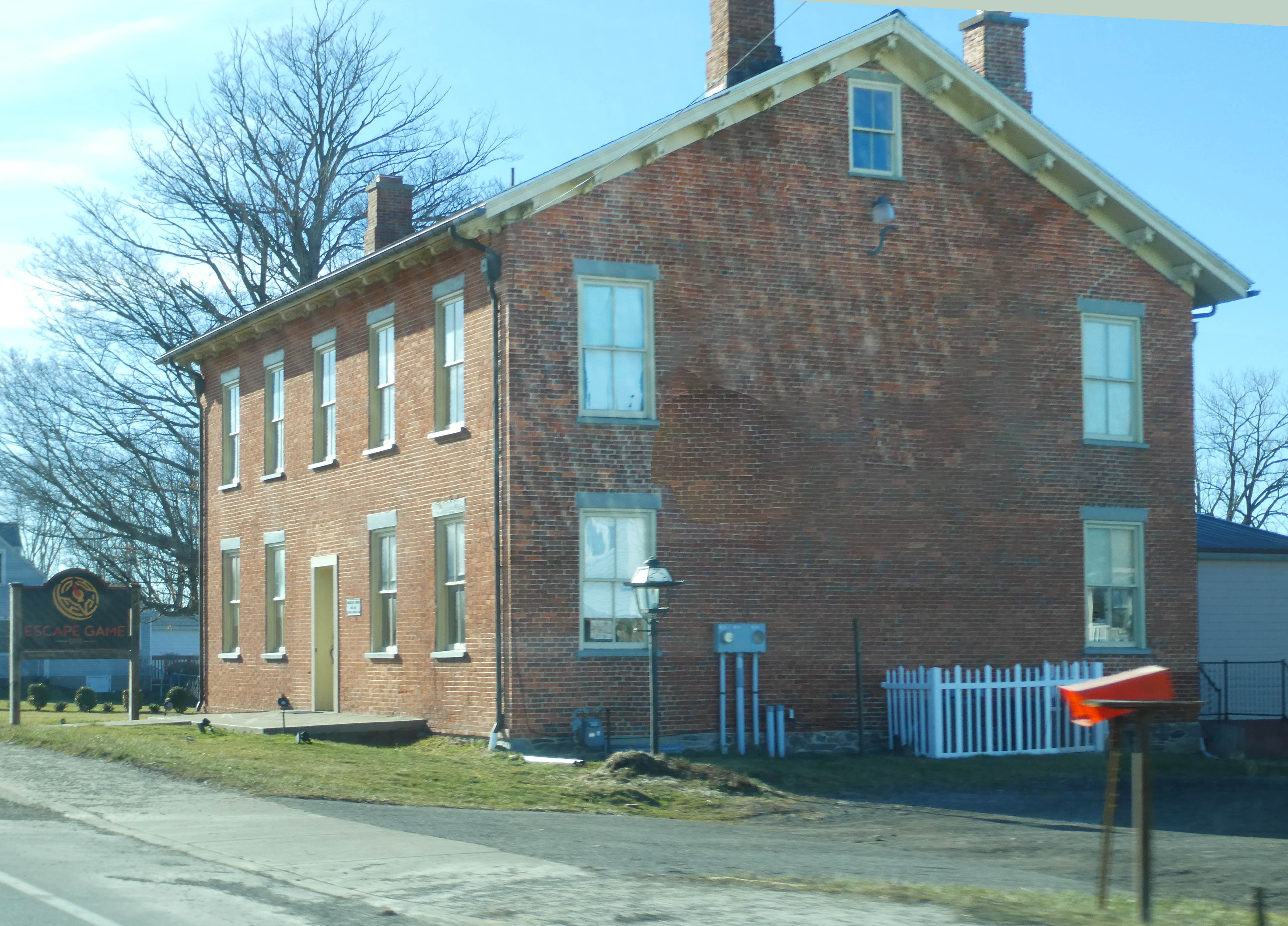
In 1826 Isabella became a widow. Ten years later, she constructed a 12-room building. “In 1836 Isabella Nicholson burned the bricks for her tavern and inn,” according to historian Marcus Lewis. “Of the early houses it is perhaps the only one on record to be planned in every detail and financed by a woman.”
And the records show that upon the structure’s completion she did not owe “one red cent.”
That brick structure still stands today at 4838 West Ridge Road. It opened in 1837 and although it is not utilized as an inn or tavern anymore, it is still in use.
Author’s note: While compiling this article, I was emotionally affected to learn that to this day, there remains a brick structure built by one of these incredibly strong pioneer women that is still standing. I personally find it astounding to think that this great woman left behind something that we can see and make a connection with nearly two centuries later.
Next time you’re traveling on West Ridge Road take a quick peek. It’s on the north side of the road just west of Kwik Fill at 26th and Asbury. Better yet, don’t wait, make an intentional trip there. Go when it’s a low-traffic time, and feast your eyes on this 189-year-old architectural artifact built by one of Erie’s pioneer women.


 xtinethewriter.com ~ Where Creativity Lives in Words and Pictures